
For thousands of Omaha drivers, Highway 75 is simply the road they take to get from one part of the city to another.
For North Omaha, the North Freeway carries a much more complicated history.
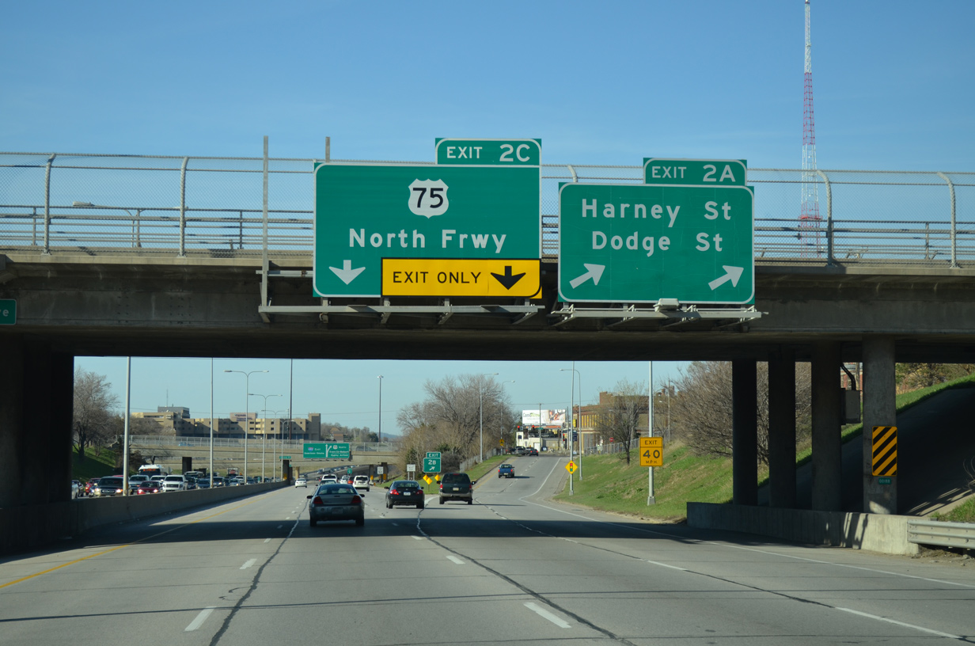
Before there were entrance ramps, concrete barriers and multiple lanes of traffic running through the neighborhood, there were homes.
There were businesses.
There were churches and gathering places.
There were neighbors who lived within walking distance of one another.
And there was a thriving Black community whose families had spent generations building lives, businesses and property in North Omaha.
When the North Freeway was built through the community, some of that disappeared.
Now, decades later, North Omaha residents are being asked to help imagine what reconnecting some of what was divided could look like.
A $1.5 Million Opportunity to Look Again
The Omaha-Council Bluffs Metropolitan Area Planning Agency, or MAPA, has received a $1.5 million Reconnecting Communities grant from the U.S. Department of Transportation to study improvements along the North Freeway corridor.
On September 22, the Omaha City Council unanimously approved an additional $189,500 in local funding for the effort.
This isn't funding to tear down the freeway tomorrow.
It's funding to study possibilities.
The work will include community engagement, planning, conceptual design and preliminary engineering to examine ways the freeway could become less of a barrier between neighborhoods.
Potential ideas include improved pedestrian and bicycle connections, wider or redesigned bridges, development near the freeway and even concepts that could place usable space over portions of the roadway.
But before talking about what might come next, it's worth remembering how North Omaha got here.
Before the Freeway, There Was a Neighborhood
North Omaha's Black community didn't simply appear around Highway 75.
It was already there.
By the middle of the 20th century, generations of Black Omahans had built homes, opened businesses, established churches and created a strong cultural and commercial center around North 24th Street and the surrounding neighborhoods.
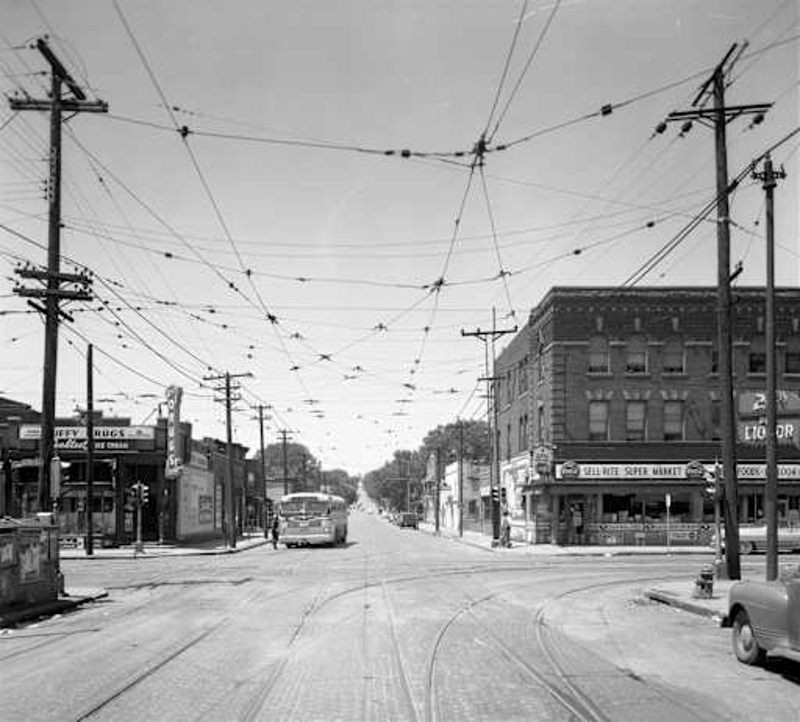
Housing discrimination and redlining had severely limited where Black families could buy property in Omaha. Despite those barriers, Black homeownership grew.
Research associated with the Omaha Spatial Justice Project found that Black homeownership in Omaha reached a high point around 1950, when Black homeowners outnumbered renters for the first time.
Many of those homeowners lived in the area that would later be affected by the North Freeway.
That means the land in the freeway's path wasn't simply empty space on a planning map.
It represented homes, family investments and, for some families, one of the few opportunities available at the time to build wealth through property ownership.
Then Came the Freeway
Planning and construction of the North Freeway unfolded over decades.
Early construction began in the 1960s, and additional sections followed through the 1970s and 1980s before the freeway was completed near the end of the 1980s.
As the roadway pushed north, properties had to be acquired and structures removed.
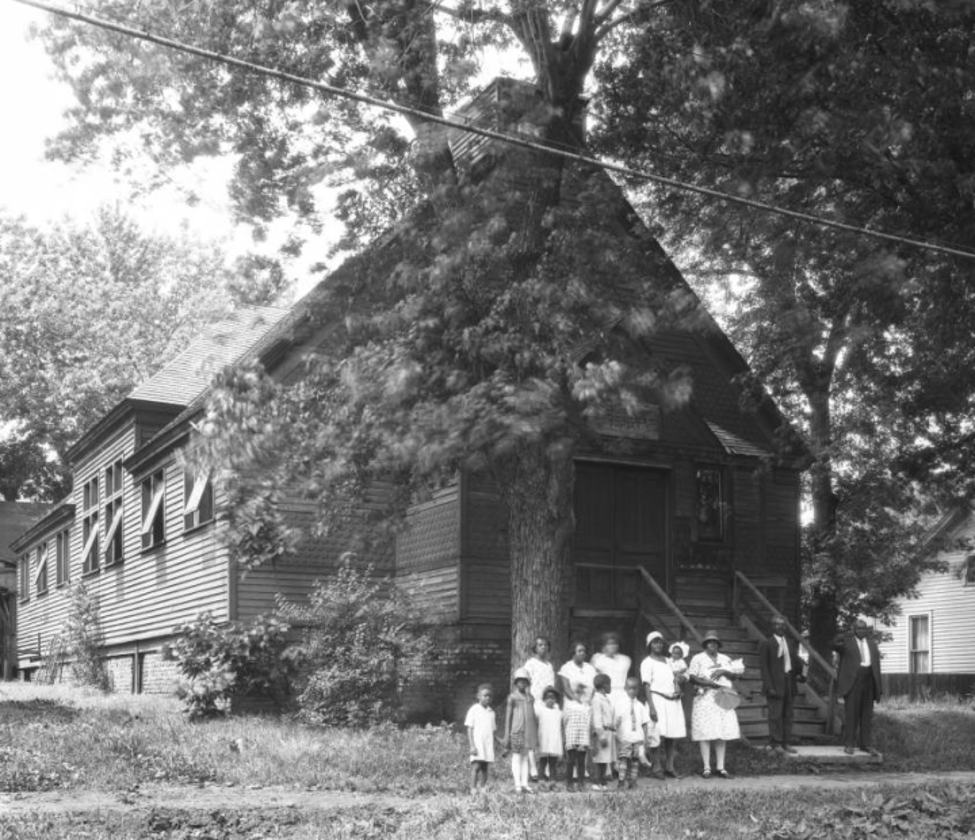
Homes disappeared.
Businesses disappeared.
Families moved.
At the Spencer Homes public housing development alone, a 1977 plan called for the removal of 11 buildings and displacement of approximately 160 people to make room for the freeway.
Across the larger corridor, the impact was much greater.
Recent local reporting and planning documents describe the freeway as displacing large numbers of North Omaha residents and eliminating homes, businesses and other neighborhood properties.
But the impact wasn't limited to what was demolished.
The freeway also created a physical barrier through the community.
A neighborhood that had once been connected by ordinary city streets now had a multilane highway running through it.
What Happens When a Road Cuts Through a Community?
Imagine your own neighborhood.
Think about the route you would take to walk to a friend's house, a neighborhood business, church or school.
Now put a freeway in the middle of it.
That helps explain why the impact of Highway 75 didn't end when construction crews left.
The freeway changed how people moved through North Omaha.
It redirected traffic.
It separated blocks and neighborhoods.
And businesses that once depended on people moving through neighborhood commercial corridors were affected as traffic patterns changed.
Community members participating in MAPA's earlier Thriving Communities Initiative identified several lasting effects associated with construction of Highway 75, including resident displacement, loss of local businesses, reduced property values, increased traffic and environmental concerns.
Those impacts became part of a much larger story of disinvestment in North Omaha.
The freeway wasn't responsible for every challenge the community faced. Redlining, housing discrimination, suburban development, changing retail patterns and other economic forces were also reshaping Omaha.
But Highway 75 became a very visible dividing line through a community already dealing with those pressures.
The Cost Wasn't Just Buildings
One of the most important parts of this history is harder to see from the driver's seat.
When a family loses a home, the loss isn't measured only in lumber, bricks and square footage.
A home can become equity.
Equity can help pay for college.
It can help someone start a business.
It can be passed to children.
It can become part of a family's financial foundation.
When Black families lost property in the path of the freeway during an era when housing discrimination restricted where they could relocate, the consequences could stretch far beyond one generation.
Businesses faced a similar challenge.
Losing a storefront doesn't just mean changing addresses. A business can lose customers, neighborhood visibility and the network of relationships built around a particular location.
That is why today's conversation about Highway 75 isn't simply about transportation.
It is also about community, economic opportunity and generational wealth.
This Time, Residents Are at the Table
That brings us back to the new study.
One of the biggest differences between the history of the freeway and today's planning effort is supposed to be who gets to participate in the conversation.
MAPA's earlier work brought in community partners including Spark and One Omaha to gather feedback from North Omaha residents.
Residents talked about housing, economic development, pedestrian connections, transportation and what it would take to make the freeway less of a dividing line.
That community involvement helped shape the next phase of the project.
Kimara Snipes, executive director of One Omaha, has emphasized that the freeway's impact extended beyond property loss to businesses losing customers and families losing opportunities to pass wealth to future generations.
Buey Ray Tut, CEO of Spark, has described the freeway as a barrier dividing two sides of the community.
And Councilwoman LaVonya Goodwin, whose district includes much of North Omaha, supported the city's participation in the Reconnecting Communities program.
Longtime North Omaha resident and historian Preston Love Jr., who remembers the community before the freeway, has also been part of the broader conversation about understanding what was lost and how North Omaha moves forward.
What Could Reconnecting Look Like?
No final design has been selected.
That's important.
The purpose of this process is to study possibilities and hear from the people who live in the community before deciding what should happen.
Some possibilities are relatively straightforward: better pedestrian and bicycle crossings, improved transit connections and redesigned bridges.
Others could be much more ambitious.
Planning documents say the study can examine concepts including additional bridges, development near the freeway and potentially covering portions of the freeway to create usable space above it, an approach sometimes called capping or stitching a freeway.
Near 30th and Dodge, planners are also considering whether changes to ramps could free land that is currently difficult or impossible to develop.
The study is expected to take roughly 18 months once fully underway.
Whatever ideas eventually emerge, the larger question will be whether they create something North Omaha residents can actually use and benefit from.
Reconnecting More Than Streets
A bridge can reconnect two streets.
A walking path can reconnect two blocks.
But reconnecting a community takes more.
It can mean creating places where businesses can grow.
Making it easier for residents to walk safely between neighborhoods.
Creating housing without pushing longtime residents out.
Returning unused land to productive community use.
Making room for small businesses and neighborhood development.
And giving residents a meaningful voice before decisions are made, rather than after construction plans are already drawn.
There is no way to rebuild every home that once stood in the path of Highway 75.
There is no way to return every business or recreate North Omaha exactly as it existed before the freeway.
But understanding what happened matters because it can help shape what happens next.
For decades, Highway 75 has helped people travel through North Omaha.
The opportunity now is to ask a different question:
How can the investment surrounding Highway 75 also help the people who live in North Omaha?
That answer shouldn't come only from engineers, planners or government offices.
It should also come from the residents who cross the freeway every day, the businesses operating beside it, the families whose history predates it and the next generation that will inherit whatever is built next.
Because if the goal is truly to reconnect North Omaha, North Omaha should help decide what reconnection looks like.